Panchkula School Incident: Child Safety And Inclusive Education
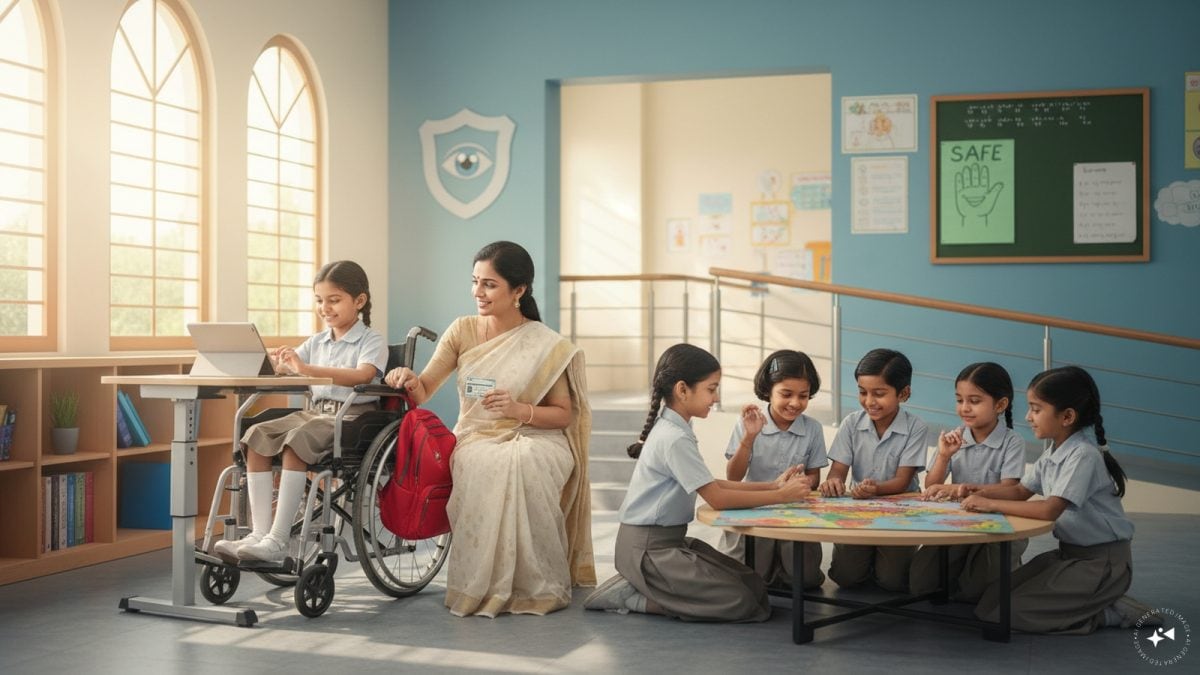
An incident at a Panchkula school highlights the need for safer classrooms, adequate supervision and better support for children with special needs. Here's what schools must do.
A reported incident involving two young students at a Panchkula school highlights the importance of adequate supervision, trained teachers, individualised support and stronger child-protection systems in educational institutions.
A disturbing incident reported a Panchkula school has brought renewed attention to the safety and well-being of children in schools, particularly those with special needs.
Read More: Panchkula Horror: Class 3 Student Allegedly Attacks KG Special-Needs Girl With Stones, Flowerpot
According to reports, a KG student with special needs was allegedly assaulted by a student of Class III inside the school premises. The reported incident involved the use of stones and a flowerpot, leaving the younger child seriously injured.
The incident has reportedly come under police investigation, with authorities examining the circumstances and collecting information from the school management.
CCTV Footage Raises Questions About Supervision
One aspect that deserves careful examination is the reported CCTV footage, which appears to show both children alone in the classroom at the relevant time.
The footage and the complete sequence of events will need to be examined by the investigating authorities before any conclusions are drawn.
Nevertheless, the incident provides an opportunity to reflect on an important aspect of school education: adequate adult supervision, particularly when young children and children requiring additional support are involved.
It is equally important to understand that both children are minors. Their developmental needs, circumstances and well-being must be considered with sensitivity. The objective should be to establish the facts, understand what happened and identify measures that can prevent similar incidents.
Inclusive Education: Admission Alone Is Not Enough
Inclusive education is not simply about providing admission to children with special needs in mainstream schools.
It involves creating an environment in which every child feels safe, accepted, supported and able to participate in learning.
Children with special needs may require different levels of assistance depending on their individual developmental, communication, behavioural and physical requirements.
Schools must therefore adopt an individualised approach rather than assume that one system of supervision and support will work equally well for every child.
Dos and Don’ts for Schools When Educating Children with Special Needs
Supervision and classroom safety
Dos
Ensure appropriate adult supervision, particularly for younger children.
Assess individual support requirements and provide assistance accordingly.
Establish clear procedures for classroom movement, breaks and transitions.
Conduct regular reviews of classroom safety arrangements.
Don’ts
Leave young children without appropriate supervision.
Assume CCTV cameras can replace the presence of responsible adults.
Overlook potential safety risks within classrooms.
Teacher training and awareness
Dos
Provide teachers with regular training in inclusive education.
Help teachers understand different disabilities and individual support needs.
Train staff to recognise signs of distress, anxiety and behavioural difficulties.
Encourage collaboration between classroom teachers, special educators and parents.
Don’ts
Expect teachers to handle complex situations without adequate training.
Make assumptions about a child’s behaviour or capabilities.
Ignore concerns raised by parents or support staff.
Creating an inclusive classroom environment
Dos
Promote empathy, kindness and respect among all students.
Encourage children to understand and accept individual differences.
Provide suitable classroom arrangements and learning support.
Address bullying, intimidation and physical aggression through appropriate procedures.
Don’ts
Isolate children with special needs unnecessarily.
Treat differences as a reason for exclusion.
Allow repeated behavioural concerns to go unaddressed.
Parent-school partnership
Dos
Maintain regular communication with parents.
Discuss individual support and safety requirements.
Develop appropriate support plans in consultation with parents and specialists.
Inform parents promptly about significant incidents involving their children.
Don’ts
Treat parents’ concerns as routine complaints.
Make important decisions about a child’s support without appropriate
consultation.
Allow communication gaps to develop between home and school.
Emergency preparedness and child protection
Dos
Establish written procedures for medical emergencies and physical injuries.
Ensure staff know how to access immediate medical assistance.
Maintain accurate incident reports.
Preserve relevant CCTV footage and cooperate with investigating authorities.
Review safety procedures following any serious incident.
Don’ts
Delay medical assistance.
Withhold relevant information from the appropriate authorities.
Treat serious safety incidents as routine disciplinary matters.
Understanding the Legal Responsibilities of Schools in India
The incident also provides an opportunity to revisit the legal framework governing inclusive education and child safety.
Rights of Persons with Disabilities Act, 2016
Section 16 requires educational institutions to provide inclusive education to children with disabilities without discrimination. It also addresses accessibility, reasonable accommodation and appropriate support.
Section 17 provides for measures to promote inclusive education, including teacher training and other forms of educational support.
Right to Education Act, 2009
Section 17 prohibits physical punishment and mental harassment of children in schools.
The provision reinforces the importance of providing children with a safe and dignified learning environment.
Juvenile Justice (Care and Protection of Children) Act, 2015
The Act establishes a child-sensitive framework for dealing with children in conflict with law and children in need of care and protection.
In incidents involving minors, the legal process must take into account their age, developmental needs, dignity and rehabilitation.
POCSO Act, 2012
The Protection of Children from Sexual Offences Act provides protection against sexual offences involving children. Its reporting and other provisions apply where the facts disclose an offence covered by the Act. It should not be treated as a general law governing every incident of physical aggression.
What Should Schools Do Going Forward?
Rather than waiting for an unfortunate incident to expose gaps in safety arrangements, schools should periodically review their systems. School managements, principals and education authorities should consider:
Conducting comprehensive child-safety audits.
Reviewing classroom supervision arrangements.
Ensuring appropriate support for children with disabilities.
Providing regular training to teachers and non-teaching staff.
Establishing effective communication and grievance-redressal systems.
Reviewing emergency response and incident-reporting procedures.
A Shared Responsibility Towards Every Child
The Panchkula incident is a reminder that schools are entrusted with a responsibility that extends far beyond academic education.
Every child, irrespective of age, ability or individual needs, deserves a safe and supportive environment.
Inclusive education must be measured not merely by how many children with special needs are admitted into mainstream schools, but by how effectively schools ensure their safety, dignity, participation and overall development.
Ultimately, child safety is a shared responsibility of school managements, teachers, parents, education authorities and society. Every school must strive to ensure that no child feels vulnerable, neglected or unsafe within its premises.